Running a closely held business on Long Island means wearing many hats all year long. By the time Q4 arrives, most owners are stretched thin between operations, staffing, and client demands. Financial statement preparation often gets pushed to the back burner, and that delay creates real problems at tax time.
At Heritage Accountants & Advisors, we provide CPA accounting services on Long Island for business owners across Suffolk and Nassau counties who reach year-end without a clear picture of where they stand financially. Disorganized records, missing reconciliations, and incomplete documentation slow down the filing process and increase the risk of errors. A structured checklist prevents that.
This guide walks you through the exact steps our team recommends before December 31. Whether you handle your own books or work with a CPA, following this process puts your business in a stronger position heading into the new year.

Accurate year-end financial statements give you a reliable snapshot of business performance, support tax filings, and satisfy lender or investor requirements.
That answer covers three distinct goals at once. Many owners focus only on taxes and miss the other two.
The U.S. Small Business Administration notes that maintaining accurate financial records is a baseline requirement for any business seeking financing or preparing for a business valuation.
The IRS also requires that income and expenses be supported by records that clearly establish the amounts reported on your return.
Without complete records, you leave yourself exposed to audits, missed deductions, and inaccurate reporting.
Start here. Every bank account and credit card tied to the business must be reconciled through December 31.
Reconciliation means matching your internal records to the actual bank statements, transaction by transaction. Unreconciled accounts produce unreliable financial statements.
All deposits recorded and matched to bank credits
All cleared checks accounted for
Outstanding checks older than 90 days - flagged for follow-up
Credit card charges coded to the correct expense categories
If you use accounting software, run the reconciliation report for each account before moving to the next step. Our team at Heritage Accountants & Advisors uses this as the starting point for every year-end engagement.
Unpaid invoices and outstanding bills both affect your year-end balance sheet. Review each aging report carefully.
Identify invoices more than 90 days past due
Determine which balances are uncollectible and may qualify as bad debt deductions
Send final collection notices before year-end if applicable
Confirm all vendor bills through December are entered
Identify any bills received in January that relate to December services
Accrue December expenses not yet invoiced
This step directly impacts net income and your balance sheet totals. Skipping it produces financial statements that do not reflect your actual position.
Businesses that carry physical inventory must count stock as of December 31. This number feeds directly into your cost of goods sold calculation.
Gross profit on your income statement
Asset totals on your balance sheet
The accuracy of your tax return
Document your count with date-stamped records. For retail, manufacturing, or distribution businesses, this step is non-negotiable.
Pull your fixed asset schedule and confirm it reflects everything the business owns.
Any equipment, vehicles, or furniture purchased during the year has been added
Items sold or disposed of have been removed
Depreciation for the year has been calculated correctly
The IRS allows businesses to use Section 179 expensing or bonus depreciation to accelerate deductions on qualifying assets. These elections must be made before filing, and they require accurate asset records.
If you are unsure which method applies to your situation, the team at Heritage Accountants & Advisors can review your asset list and identify the most tax-efficient approach.
Payroll errors are one of the most common reasons year-end financial statements require correction.
Confirm all payroll runs through December 31 are posted
Verify payroll tax deposits match IRS records
Confirm W-2 and 1099 data is accurate and ready to file
The IRS requires W-2s and 1099-NECs to be furnished to recipients by January 31. Starting this review in November or early December avoids a last-minute rush.
Financial statements are only as reliable as the records behind them. Every significant transaction should have documentation.
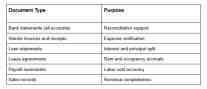
Filing these in a single, organized folder, whether physical or digital, saves time during tax preparation and protects you in the event of an audit.
If the business carries debt, confirm the year-end balances on all loans and lines of credit.
Outstanding principal balance as of December 31
Interest paid during the year (separate from principal)
Any new financing obtained during the year
Interest on business loans is generally deductible. Accurate loan records prevent you from under-claiming this deduction or misclassifying principal payments as expenses.
Once all transactions are posted, close out the income and expense accounts for the year.
This step produces your year-end income statement, also called a profit and loss statement, and updates your retained earnings balance on the balance sheet.
All adjusting journal entries have been posted
Depreciation entries are finalized
Accruals for December expenses are recorded
The owner's draw or distributions are properly classified
At Heritage Accountants & Advisors, we review these closing entries with every client before issuing final financial statements. It is the step where errors are most commonly introduced.
Income Statement (Profit and Loss) — shows revenue, expenses, and net income for the full year
Balance Sheet — shows assets, liabilities, and equity as of December 31
Cash Flow Statement — shows how cash moved in and out of the business during the year
These three statements together give you a complete picture of business performance, financial position, and liquidity.
If you are applying for a loan, seeking investors, or planning a sale, lenders and advisors will require reviewed or audited versions of these statements, not just internally prepared ones. Heritage Accountants & Advisors provides compiled, reviewed, and audited financial statement preparation in Hauppauge and across Long Island for exactly this purpose.
Once your records are organized, schedule a year-end review with your CPA before filing season begins.
A review of the financial statements for accuracy
Tax planning opportunities before December 31
Retirement plan contribution deadlines
Any entity structure changes to consider for the coming year
Small business bookkeeping in Hauppauge, NY , reaches its highest value when paired with proactive advisory conversations, not just compliance work. Our clients who schedule a year-end planning meeting consistently identify deductions and strategies that would otherwise be missed.
Here are four errors we see repeatedly when business owners skip steps in this process:
Mixing personal and business expenses. Personal charges run through a business account create problems for the income statement and complicate tax filings.
Failing to accrue December expenses. Bills that arrive in January for December services belong in December. Missing these makes net income appear higher than it actually was.
Skipping the fixed asset review. Businesses that miss new equipment purchases or fail to remove disposed assets carry errors forward on every future balance sheet.
Waiting until April to start. By March, your CPA is deep in the filing season. Year-end preparation done in November and December gives you the most time and the most options.
Heritage Accountants & Advisors provides accounting and bookkeeping services on Long Island designed to take the complexity out of year-end preparation. Our team brings Big 4 experience to closely held businesses across Hauppauge, Suffolk County, and the greater New York metro area.
Our year-end services include:
Bank and credit card reconciliation
Financial statement preparation in Hauppauge and across Long Island
Payroll review and 1099 processing
Adjusting journal entries and account closing
Tax planning consultations
CPA accounting services in Long Island for compiled, reviewed, and audited statements
We also work alongside legal counsel, lenders, and insurance professionals so our clients have a coordinated team, not just a single advisor.
Ross Pearlman, a client, shared this:
"Scott and the Heritage team are fantastic partners to work with. Highly skilled, organized, and get things done. Scott is always two steps ahead, always on time, and highly communicative. Prior accountants I worked with were always transactional, and a mess. Heritage is a real partner I can lean on for advice and support."
Joe Joe, another client, noted:
"This company is among the best group of honest and qualified accountants I have done business with."
These outcomes reflect what structured, proactive accounting looks like in practice. At Heritage Accountants & Advisors, we bring this same approach to every year-end engagement.

The businesses that finish the year in the strongest financial position are often the ones that begin reviewing their finances early, not at the last minute.
Heritage Accountants & Advisors is currently scheduling mid-year financial review appointments for Long Island business owners. Whether you need full-service small business bookkeeping, simple accounting and bookkeeping services on Long Island , or a second opinion on your existing records, our team is ready to help.
The information provided in this guide is for informational purposes only and does not constitute specific tax, legal, or accounting advice.
Call us at (631) 543-7700 or email info@heritage.cpa to schedule your mid-year consultation. Our office is located at 201 Moreland Road, Suite 3, Hauppauge, NY 11788, and we serve clients across Suffolk and Nassau counties and the greater New York metro area.